LITTLE RED DOOR / AGRI/CULTURE / 2025–2026
LITTLEWHITELIES
Open the Red Door.
Find the Not So White Lies.
A documented guide to Little Red Door’s sustainable storytelling in the Agri/Culture menu.
01 / Manifesto
WE ARE DONE STAYING QUIET.
100% energy wasted?
Probably.
Worth it if just one person acts on it?
100%.
If one person speaks when they would once have stayed silent, it was worth it.
If one brand starts asking whether its values are actually reflected in the people and projects it supports, it was worth it.
If one institution begins taking responsibility for what it rewards, it was worth it.
If the next generation learns that speaking up does not have to mean standing alone, it was worth it.
Little White Lies comes from this industry too.
We know its codes. We have been part of them.
But these are troubled times. Values matter again.
So we have made a choice:
We are done staying quiet.
We put the facts on the table.
What happens next belongs to everyone who sees them.
The conversation does not end here.
If you have something to say about the bar industry — a story to share, a question to raise, a perspective we should hear — our inbox is open.
pushthereddoor@littlewhitelies.paris
We did our part.
Now do yours.
Now do yours.
02 / A note about the team
This is not about the people serving the drinks.
Little Red Door has, and has had, an extraordinary hospitality team.
The bartenders and front-of-house staff delivering these drinks night after night are not the subject of this website.
Quite the opposite.
Their job was to welcome guests, explain the menu and present the stories attached to each cocktail.
There is no suggestion here that those team members knew that any sourcing, provenance or sustainability claim they were asked to communicate may have been inaccurate.
They were presenting the information given to them.
If elements of that information were incomplete, misleading or unsupported, then the people standing behind the bar may have been among the people misled by it.
And that distinction matters.
Great hospitality does not become bad hospitality because the story behind an ingredient turns out to be wrong.
The purpose of Little White Lies is not to attack bartenders, servers, junior managers or the people responsible for looking after guests.
It is to examine the claims they were asked to repeat.
So if you visited Little Red Door and received exceptional hospitality:
that part of the story may well have been entirely true.
This website is about the other parts.
03 / Before we start
One small question about timing.
On 7 August 2026, Laurence Marot — Academy Chair for France for The World’s 50 Best Bars — was directly alerted to concerns regarding the accuracy of sourcing and sustainability claims attached to Little Red Door’s Agri/Culture menu.
The issues raised included the provenance of ingredients and discrepancies between named producers and the products represented to customers.
According to correspondence retained by this archive, those concerns were acknowledged and a follow-up was expected.
On 2 September 2026, following further contact, Marot replied that she had other priorities at the time.
Concerns communicated to the France Academy Chair.
Further contact. The correspondence remains on file.
Little Red Door appears in the extended 51–100 ranking.
93
Little Red Door
Paris
The World’s 50 Best Bars
extended 51–100 ranking
23 September 2026
Paris
The World’s 50 Best Bars
extended 51–100 ranking
23 September 2026
So, before looking at basil, Beaufort, sake, strawberries, beetroot or elderberry, one point is worth making very clear:
The France Academy Chair had been alerted to these concerns well before the ranking was announced.
This does not tell us how anyone voted.
It does not establish that the wider organisation investigated the concerns.
It does not establish that the ranking should have been different.
And it would be wrong to claim any of those things without evidence.
It establishes something much simpler:
the concerns existed.
they had been communicated.
and the relevant France Academy Chair knew about them before Little Red Door was announced as No. 93.
they had been communicated.
and the relevant France Academy Chair knew about them before Little Red Door was announced as No. 93.
The World’s 50 Best Bars explains that its Academy is divided into geographical regions, with Academy Chairs involved in assembling the voting panels for their regions.
Which makes the following question rather reasonable:
When a ranking organisation’s regional chair is alerted to potentially misleading consumer-facing sustainability claims about a venue before publication of the ranking, what — if anything — happens next?
We don’t know.
And unlike the basil, this one cannot be solved with a delivery note.
Public references: The World’s 50 Best Bars Academy page; 2026 51–100 ranking. Private correspondence: document on file.
04 / Perspective
WHY DOES IT MATTER?
Because this is not just about basil.
Or beetroot.
Or strawberries.
Or sake.
It is about what happens when sustainability becomes part of the value of a product.
Awards are given.
Rankings are published.
Brands invest.
Budgets are allocated.
Teams spend months developing menus, sourcing products and telling stories to guests.
Other bars invest real time and real money trying to do the same work properly.
Consumers pay for the result.
And at the scale of a venue like Little Red Door, these are not claims attached to two cocktails served on a quiet Tuesday.
They are repeated across thousands of drinks, across an entire menu cycle, through press coverage, social media, brand partnerships, industry awards and international recognition.
That matters.
Because when provenance, sustainability or producer relationships become part of the reason a product is celebrated, those claims create value.
Commercial value.
Reputational value.
Award value.
Brand value.
And visibility.
If those claims are accurate, excellent.
They deserve the recognition they receive.
But if they are not, the consequences extend far beyond one customer receiving one drink.
The consumer may be paying for a story that is not supported by the underlying supply chain.
Brands may be associating their names and budgets with claims they reasonably expect to be accurate.
Awards and rankings may be rewarding work on the basis of narratives that other venues have spent significant time, money and effort genuinely implementing.
And bars that actually undertake the difficult, expensive and often unglamorous work of traceability receive none of the advantage created by simply announcing that the work has been done.
That is why this matters.
Because sustainability should not become a competitive advantage available simply to whoever tells the best story.
If the claim creates the value, the evidence should support the claim.
And if everything was exactly as presented?
Perfect.
The receipts should make that very easy to show.
05 / The investigation
NOW, ABOUT THE BASIL.AND, MOSTLY, AGRI/CULTURE.
Eleven cocktails.
Eleven agricultural practices.
Named producers.
Named ingredients.
A story about where things come from, how they are grown, and why that matters.
Wonderful.
invoices.
delivery notes.
dates.
quantities.
supplier records. And because Agri/Culture ran for roughly a year, there is a remarkably old-fashioned way of checking how closely the story followed the ingredients.
delivery notes.
dates.
quantities.
supplier records. And because Agri/Culture ran for roughly a year, there is a remarkably old-fashioned way of checking how closely the story followed the ingredients.
Welcome to Little White Lies.
COCKTAIL / AQUAPONIE
Case 01
AQUAPONIE
THE BASIL QUESTION
Possibly the easiest one.
The story behind Aquaponie is particularly specific.
A named producer: JADEN, in Chantilly.
A named agricultural system: aquaponics.
And a named ingredient: basil.
JADEN really does operate an aquaponic garden in Chantilly and grows basil.
So far, so sustainable.
DID JADEN EVER SUPPLY THE BASIL?
According to the records assembled for this archive, no delivery of JADEN basil to Little Red Door has been identified anywhere across the run of the menu.
That proposition is exceptionally easy to challenge.
There should be paperwork.
What you should ask Little Red Door
Show the JADEN invoices.
Show the purchase orders.
Show the delivery notes.
Show the delivery dates.
Show the quantities.
Show the variety of basil supplied.
Thai basil? Standard basil? Something else?
And then compare those quantities with the number of Aquaponie cocktails sold.
That is all.
Or just ask JADEN
JADEN — Jardin Aquaponique Durable et Écocitoyen de la Nonette
24 rue de la Nonette
60500 Chantilly
France
Did JADEN ever sell or deliver basil to Little Red Door for the Agri/Culture menu? If so, on what dates and in what quantities?
Yes or no.
Dates.
Quantities.
Invoices.
Sustainability can be complicated.
This really isn’t.
A small note for Bacardi
Aquaponie also features two rather recognisable names:
GREY GOOSE.
ST-GERMAIN.
ST-GERMAIN.
Both sit in the Bacardi portfolio.
So we’re sure Bacardi will be absolutely delighted to discover how easy the provenance story attached to two of its brands is to verify.
One producer.
One herb.
One year’s paperwork.
One herb.
One year’s paperwork.
No lifecycle assessment required.
Aquaponics
Fish feed plants.
Plants clean water.
Water returns to the fish.
It’s a beautiful closed-loop system.
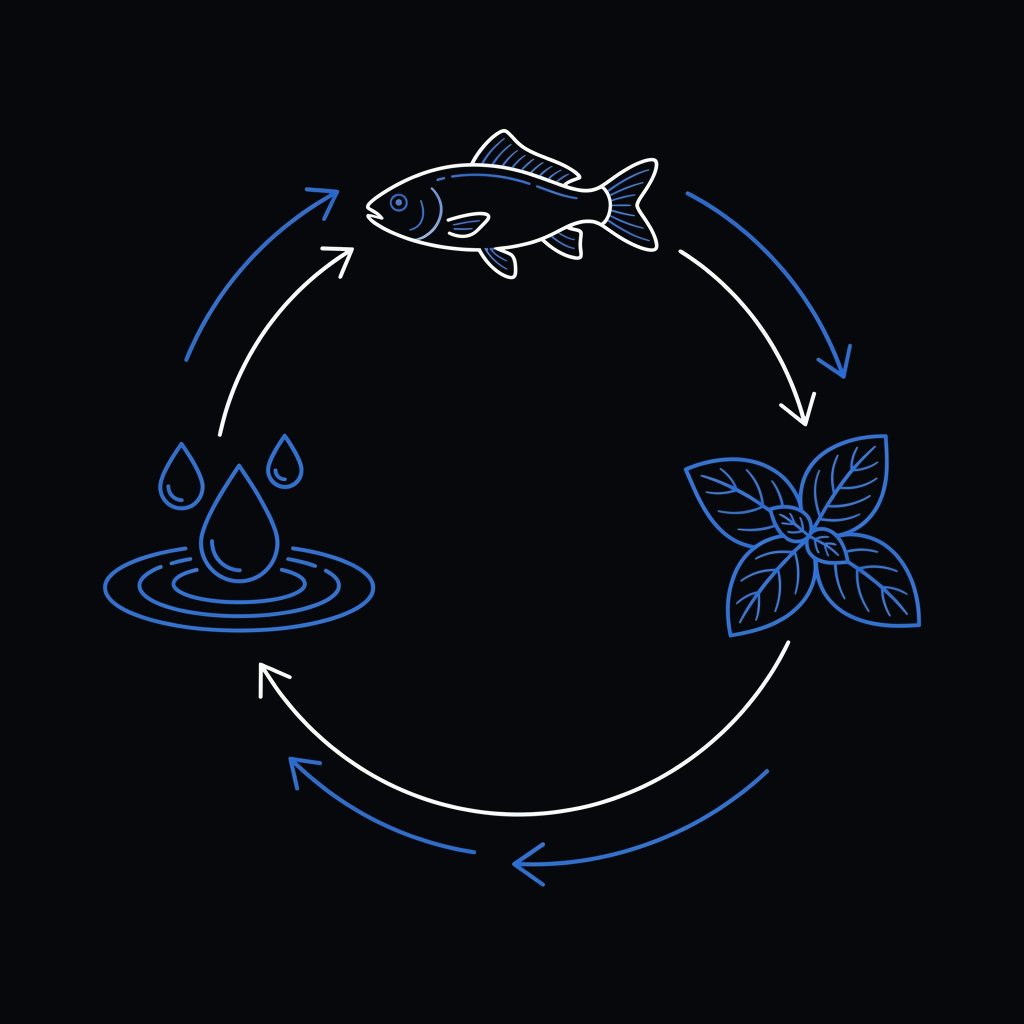
The basil should probably appear somewhere in the loop.
COCKTAIL / CIRCULAIRE
Case 02
CIRCULAIRE
THE BEAUFORT QUESTION
Savoie Lactée is an excellent sustainability story.
It was created within the Beaufort dairy ecosystem to recover and transform whey generated by cheese production.
Very circular.
There is only one small detail.
Savoie Lactée’s published product range does not include Beaufort.
Its public range includes products such as:
Sérac. Ricotta. Butter. Whey-derived products.
But not Beaufort cheese.
Which makes the verification process unusually straightforward.
What you should ask Savoie Lactée
Not:
“Are you connected to Beaufort producers?”
They clearly are.
Ask:
“Do you sell Beaufort?”
And then:
“Did Savoie Lactée sell or invoice Beaufort to Little Red Door during the Agri/Culture menu?”
If yes: How much? When? Which invoices? Which deliveries?
If no:
Well.
That would also be quite informative.
Ask them yourself
SAVOIE LACTÉE
228 chemin de Californie
73200 Albertville
France
contact@savoie-lactee.com
+33 4 79 31 22 57
Close relationships are lovely.
Invoices are closer.
Invoices are closer.
Savoie Lactée exists because Beaufort is produced.
Savoie Lactée transforms products resulting from that production.
That does not automatically mean Savoie Lactée sells Beaufort.
COCKTAIL / WAKAZE
Case 03
WAKAZE
HOW MUCH SAKE CAN YOU BUY IN ADVANCE?
Now this one requires a calendar.
WAKAZE France entered judicial liquidation on:
7 JANUARY 2026
The court fixed its date of cessation of payments at:
1 NOVEMBER 2025
And yet Agri/Culture was designed to continue beyond January 2026.
That does not establish that WAKAZE disappeared from the drinks.
There are several perfectly possible explanations.
Perhaps Little Red Door bought enough stock in advance to last until the end of the menu.
Perhaps stocks remained available through distributors.
Perhaps another product eventually replaced it.
We do not need to guess.
Because sake, rather inconveniently, comes in bottles.
What you should ask Little Red Door
How many bottles of WAKAZE were purchased?
Which WAKAZE product?
On what dates?
From which supplier or distributor?
What was the final purchase date?
What quantity remained in stock after 7 January 2026?
Then: How many cocktails requiring WAKAZE were sold after that date?
WAS THERE ENOUGH WAKAZE TO LAST UNTIL THE END?
If yes: Perfect. Show the stock.
If not:
WHAT REPLACED IT?
Another sake? Another rice-based alcohol? A neutral spirit? Something else?
And on what date did the substitution begin?
WAKAZE purchased
÷
WAKAZE required per cocktail
=
maximum number of cocktails that could contain WAKAZE
We appreciate this may sound terribly sophisticated.
It is division.
It is division.
The legal record
WAKAZE FRANCE
RCS Créteil 849 398 219
9 rue de la Bergerie
94260 Fresnes
Since the company entered liquidation, the most useful records here are probably not marketing statements.
They are Little Red Door’s own purchasing records.
USED IN / PERMACULTURE
* ONE MORE BOTTLE.
And while you’re checking the sake, you may also want to ask the exact same questions about the WAKAZE umeshu listed in Permaculture.
How much was purchased? When was it purchased? What was the final delivery date? And was there enough stock to last until the end of the menu?
If not: what — if anything — replaced it?
Same company. Same calendar. Different bottle.
COCKTAIL / PRÉCISION
Case 04
PRÉCISION
STRAWBERRIES, NOW WITH NUMBERS
Maison Carletti exists.
Maison Carletti grows and processes strawberries in France.
There is therefore nothing inherently implausible about using Maison Carletti strawberries in a French agriculture menu.
The interesting question is not:
DID LITTLE RED DOOR EVER BUY FROM MAISON CARLETTI?
It may well have.
The interesting questions are:
HOW MUCH?
FOR HOW LONG?
AND WHERE DID THE REST COME FROM?
FOR HOW LONG?
AND WHERE DID THE REST COME FROM?
Because Précision was not a one-night pop-up.
The sourcing claim accompanied a menu designed to run for roughly a year.
A first order proves a first order.
It does not, by itself, explain a year’s supply.
A quantitative comparison
?
Maison Carletti supply / kg−
?
Total strawberry requirement / kgNo fake numbers. Just the quantities that the records can actually support.
What you should ask
What was the first Maison Carletti delivery?
What was the last?
How many kilograms were supplied in total?
How many deliveries were made?
How many Précision cocktails were sold?
How many grams of strawberry product were required per cocktail?
HOW MUCH STRAWBERRY DID THE MENU ACTUALLY REQUIRE?
Then compare that figure with Maison Carletti’s deliveries.
If the figures match: Excellent.
If they do not:
WHERE DID THE OTHER STRAWBERRIES COME FROM?
No allegation required.
Just arithmetic.
Ask Maison Carletti
MAISON CARLETTI
47320 Bourran
France
bonjour@maison-carletti.com
+33 6 84 42 15 50
During which periods did Maison Carletti supply strawberries or strawberry products for Little Red Door’s Agri/Culture menu, and approximately what quantities were supplied?
Again: Dates. Quantities. Deliveries.
Precision agriculture measures inputs with extraordinary accuracy.
So measuring strawberry purchases feels thematically appropriate.
So measuring strawberry purchases feels thematically appropriate.
COCKTAIL / CARBONE
Case 05
CARBONE
FOLLOW THE BEETROOT
The beetroot story attaches an agricultural practice to an ingredient and an identified producer.
Fine.
The useful question is therefore not whether beetroot exists in France.
It does.
WHICH BEETROOT WAS ACTUALLY USED THROUGHOUT THE MENU?
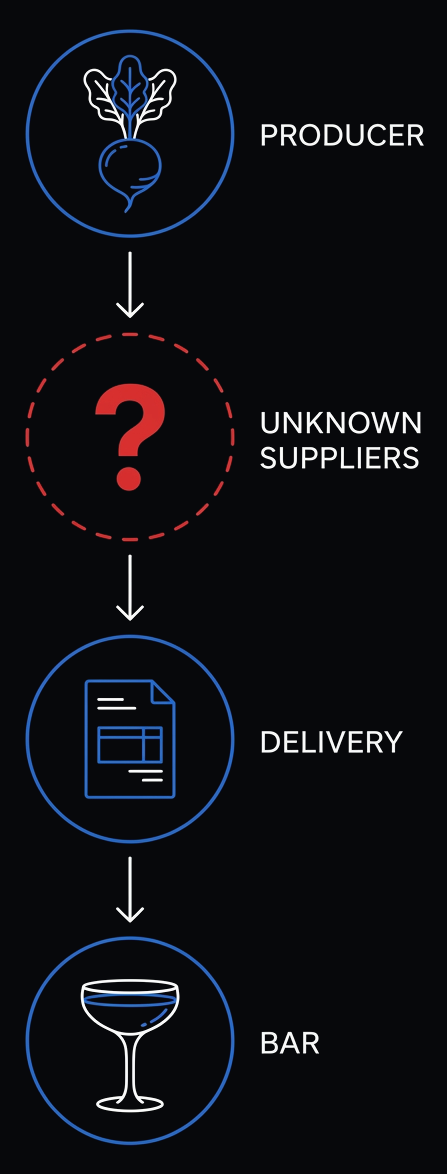
For a year-long menu, provenance is not established by identifying a suitable producer once.
It is established by the purchasing history.
What you should ask
Every beetroot supplier.
Every invoice.
Every delivery date.
Every quantity.
Every change of supplier.
And where the communication associated the ingredient with a particular producer:
How much did that producer actually supply?
Then compare it with total beetroot consumption.
Ask Les Jardins de Karine
LES JARDINS DE KARINE
19 Grande Rue
54830 Moriviller
France
lesjardinsdekarine@gmail.com
+33 6 59 10 25 08
Did Les Jardins de Karine supply beetroot to Little Red Door for the Agri/Culture menu? If so, during which periods and in what quantities?
Then compare the answer with the total quantities required.
Calculating carbon footprints can require sophisticated modelling.
Tracking where the beetroot was bought requires: Accounts payable.
Start small.
Tracking where the beetroot was bought requires: Accounts payable.
Start small.
COCKTAIL / AGROFORESTERIE
Case 06
AGROFORESTERIE
THE ELDERBERRY WITH A PAPERWORK PROBLEM
The story here requires more than the existence of an elderberry supplier.
The claim connects the ingredient to:
French provenance
and
agroforestry.
and
agroforestry.
Those are two separate propositions.
And each can be documented.
Commercial traceability
Which elderberry batches were supplied?
Where were those berries grown?
Which farms produced them?
Invoices establish a commercial relationship.
They do not necessarily establish agricultural practice.
Agricultural traceability
Were the berries used for Little Red Door actually grown within an agroforestry system?
What documents establish that?
For that, you need traceability.
Ask La Maison du Sureau
LA MAISON DU SUREAU
La Grange
7 rue du Bourg de Nuillé
53210 Soulgé-sur-Ouette
France
contact@lamaisondusureau.com
+33 6 09 37 46 06
Can the elderberry supplied for Little Red Door be traced to French-grown berries produced within an agroforestry system?
If yes:
Wonderful.
Show the traceability.
Trees. Crops. Biodiversity. Long-term thinking.
And, ideally, a delivery note.
And, ideally, a delivery note.
And finally
100%
FRENCH
FRENCH
THREE WORDS. ONE VERY LARGE SPREADSHEET.
At some point, all of these individual questions meet.
Because the Agri/Culture story was repeatedly associated with the idea of French sourcing.
And that gives us one final question.
WHAT DOES “100% FRENCH” ACTUALLY MEAN?
French company?
French distributor?
French transformation?
French agricultural raw material?
French farm?
French final product?
All of the above?
The distinction matters.
A product can be purchased in France without being grown in France.
A French company can transform an imported ingredient.
A French distributor can sell a foreign product.
And a replacement ingredient may have a completely different origin from the ingredient it replaced.
French company?Incorporated in France?
French distributor?Controlled and selling in France?
French transformation?Manufactured in France?
French agricultural raw material?Ingredients grown in France?
French farm?From French farms?
French final product?Finished product made in France?
All of the above?A truly 100% French product?
Or something else?Then define it.
So here is what you should ask for
Not a statement. Not an interview. Not another sustainability presentation.
Ask for the purchasing records covering the entire menu.
SUPPLIER
Registered business entity name
PRODUCER
Named agricultural producer cited to the guest
PRODUCT
Exact agricultural raw material & transformation specification
ORIGIN
Country of agricultural harvest (vs. country of transformation/packaging)
PURCHASE & DELIVERY DATES
Continuity of orders throughout the full menu cycle
QUANTITY
Volumes delivered vs. recipe requirements and sales data
INVOICE & DELIVERY NOTE
Auditable commercial receipts and signed delivery records
SUBSTITUTION LOG
Dates of any shortage, alternate supplier, origin of replacement product
Then compare this with: the recipes and the number of cocktails sold.
WHAT WAS THE CUSTOMER TOLD?
→
WHO WAS THE NAMED PRODUCER?
→
HOW MUCH DID THAT PRODUCER SUPPLY?
→
HOW MUCH DID THE BAR USE?
→
WHERE DID THE REST COME FROM?
That is the whole investigation.
PERHAPS EVERYTHING MATCHES.
Good.
Publish the invoices.
Perhaps the producer supplied every gram.
Excellent.
Publish the delivery notes.
Perhaps enough WAKAZE was stockpiled to finish the menu.
Wonderful.
Show the quantities.
Perhaps Maison Carletti supplied every strawberry required.
Fantastic.
The numbers will demonstrate it.
Perhaps every ingredient really was French throughout every substitution, every shortage and every season.
That should be remarkably easy to prove.
Right of reply
RIGHT OF REPLY
Any person or organisation named or identified on this website may submit a reply by emailing pushthereddoor@littlewhitelies.paris.
Replies meeting the applicable legal requirements will be published free of charge, in full and without editorial alteration, within the statutory time limits. Each reply will appear on a clearly identified dedicated page, prominently linked from the relevant article or section.
Publication of a statutory reply is not conditional on providing invoices, demonstrating a factual error or first responding on another website or social media platform.
See our Legal Notice & Right of Reply page for the full procedure.
Editorial contact
CONTACT &
CORRECTIONS
For editorial correspondence, factual corrections and right-of-reply requests, contact:
pushthereddoor@littlewhitelies.paris
Please identify the relevant page and passage. For a correction, explain the proposed change and provide supporting information where available.
Confirmed factual errors will be corrected promptly. Material corrections will be identified with a dated explanation where appropriate.
The website does not offer public comments or general discussion. Its editorial contact channel remains available for responses, corrections and legal correspondence.
Little White Lies
We don’t need you to believe us.
We need you to ask for the receipts.
Farm to glass.
Glass to story.
Story to invoice.
Glass to story.
Story to invoice.
Traceability. What a concept.